
Pogos (Ankle Hops)
Pogos, also known as ankle hops, are a plyometric drill that involves rhythmic bouncing on the balls of the feet with minimal knee bend. This exercise focuses on developing explosive ankle power, reactive strength, and running economy through the stretch-shortening cycle.
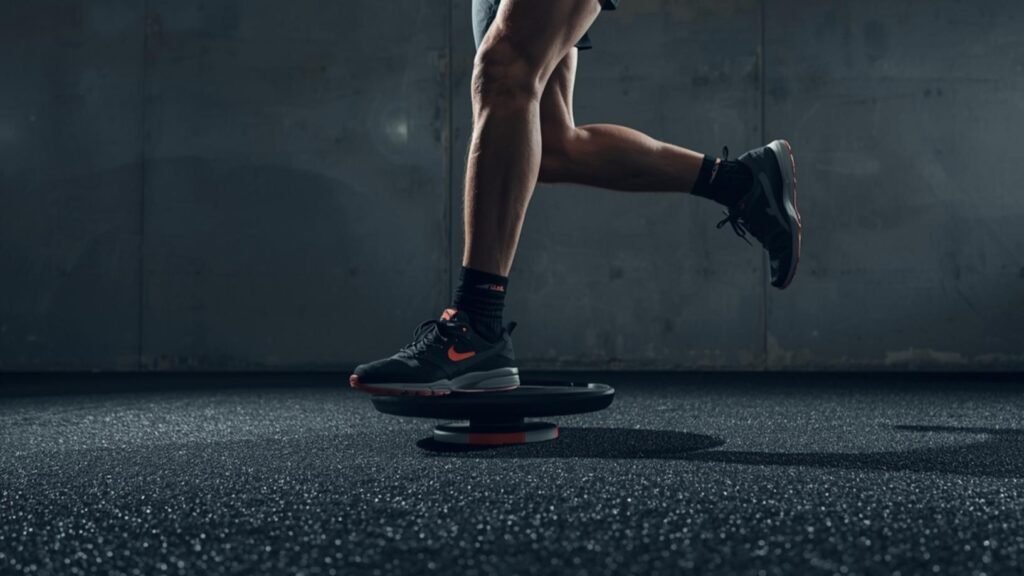
Instructions
1. Stand tall with your feet hip-width apart and your weight positioned on the balls of your feet.
2. Begin by slightly flexing your ankles, dropping your heels toward the ground while keeping your legs relatively straight.
3. Rapidly push off through the balls of your feet, extending your ankles as high as possible.
4. Immediately upon landing, allow your heels to drop again and bounce back up without pausing.
5. Maintain an upright torso with your core engaged throughout the movement.
6. Keep your arms relaxed at your sides or in a sprint arm cycle for added rhythm.
7. Perform the hops in a continuous, rhythmic motion for the prescribed distance or time.
Common Mistakes
Bending too much at the knees and turning the exercise into a squat jump. Landing heavily on the heels instead of the balls of the feet. Leaning too far forward or rounding the back. Stopping between repetitions instead of maintaining a continuous bounce. Using the hips and knees excessively rather than focusing on ankle extension. Holding breath during the drill.
Variations
Standing pogos with arms in sprint position. Walking pogos moving forward. Lateral pogos moving side to side. Single-leg pogos for advanced athletes. Pogos with resistance band assistance. Pogos into a forward sprint.
About This Exercise
Pogos, short for pogo hops, are a fundamental plyometric drill that mimics the ground contact phase of sprinting. The exercise specifically targets the ankle’s ability to store and release elastic energy through the stretch-shortening cycle. Developed by track coaches and sports scientists, pogos help athletes develop the reactive strength necessary for efficient running mechanics and improved sprint performance. The exercise is commonly used in warm-up routines, speed sessions, and plyometric circuits for athletes across multiple sports.
Tips
Keep your knees slightly soft but avoid excessive bending. Stay tall through your spine and avoid leaning forward. Focus on quick, light foot contacts with the ground. Think of bouncing like a pogo stick with maximal ankle excursion. Land softly on the balls of your feet and immediately rebound. Keep your breathing rhythmic and avoid holding your breath.
Notes & Safety
Ensure proper ankle mobility before performing this exercise. Avoid if you have existing ankle injuries or Achilles tendon issues. Start with shorter durations and build up gradually. Discontinue if you experience sharp pain in the ankles, knees, or lower back. Allow adequate recovery between sessions when first introducing this drill.
Deep Dive & Exercise Guide
Introduction
Pogos, commonly referred to as ankle hops, represent one of the most fundamental plyometric exercises used by athletes, coaches, and fitness enthusiasts worldwide. This explosive drill focuses specifically on developing the ankle’s ability to generate power through rapid extension and elastic energy storage. Whether you are a sprinter looking to improve your ground contact time or a fitness enthusiast seeking to enhance lower body power, pogos offer a simple yet highly effective training solution that requires no equipment and can be performed almost anywhere.
Benefits and Muscles Involved
The primary muscles engaged during pogos are the calves, including both the gastrocnemius and soleus muscles. These muscles work eccentrically as they absorb the impact and concentrically as they generate the explosive push-off. Secondary muscles involved include the hamstrings, quadriceps, and glutes, which assist with stabilization and power generation. The exercise also activates the tibialis anterior to control the descent of the toes after each bounce. Beyond muscular development, pogos improve running economy, enhance reactive strength, and develop the neuromuscular system’s ability to recruit fast-twitch muscle fibers rapidly.
How It Fits Into Training
Pogos are incredibly versatile and can serve multiple purposes within a training program. They are most commonly used as a warm-up exercise before sprint work or plyometric sessions to activate the ankles and prepare the nervous system for explosive movements. Coaches often prescribe pogos before track sessions, agility workouts, or any activity requiring rapid ground contacts. The exercise can also be incorporated into circuit training or conditioning workouts to add variety and increase heart rate while developing lower body power.
Who Should Use It
Pogos are suitable for a wide range of athletes and individuals. Sprinters and track athletes use them extensively to improve running mechanics and explosive ankle power. Team sport athletes including football, basketball, and rugby players benefit from the reactive strength developed through this drill. General fitness enthusiasts can use pogos to enhance lower body power and add variety to their cardiovascular workouts. However, beginners should master the basic movement pattern before progressing to more intense variations or longer durations.
Programming Considerations
When programming pogos, start with shorter distances or time intervals and gradually increase volume as your ankles adapt. A typical warm-up protocol might include two to three sets of 20 to 30 meters of pogos with full recovery between sets. For conditioning purposes, you might perform longer sets lasting 30 to 60 seconds with shorter rest periods. Always prioritize quality over quantity, ensuring each bounce maintains proper form and technique. Frequency of two to three times per week is appropriate for most athletes during training cycles focused on speed and power development.
Tips for Better Performance
Focus on staying tall and avoiding excessive forward lean during the exercise. Your knees should remain relatively straight with the power coming primarily from your ankles. Think of your body as a spring that compresses and releases rapidly. Keep your foot contacts quick and light, minimizing the time your feet spend on the ground. Use the balls of your feet as the primary contact point and avoid landing heavily on your heels. If you struggle with balance, start by holding onto a wall or sturdy object until you develop better ankle strength and coordination.
Frequently Asked Questions
Are pogos bad for your knees? When performed with proper technique, pogos are not harmful to the knees. However, excessive knee bending can increase stress on the joint, so maintaining relatively straight legs and focusing on ankle extension is important.
How many pogos should I do? For warm-up purposes, two to three sets of 20 to 30 meters is sufficient. For conditioning or power development, sets of 30 to 60 seconds or distances of 50 to 100 meters are appropriate.
Can beginners do pogos? Yes, beginners can perform pogos but should start with very short distances and focus on mastering proper technique before increasing volume or intensity.
Related Exercises: Single-Leg Bounds · Bounding · Broad Jump · Depth Jump · Tuck Jumps
Conclusion
Pogos represent a foundational plyometric exercise that offers significant benefits for athletes and fitness enthusiasts alike. By specifically targeting ankle power and reactive strength through the stretch-shortening cycle, this simple drill can dramatically improve running economy, sprint performance, and lower body explosiveness. Whether incorporated into a warm-up routine or used as a standalone power training exercise, pogos provide an accessible and effective way to develop athletic qualities that transfer to numerous sports and activities. Start with proper form, progress gradually, and enjoy the performance improvements that come from consistent practice of this excellent exercise.